It was very interesting reviewing the evaluations of the way that I evaluated myself and the way I was evaluated by my family and co-workers. I assumed that it would be different for family and co-workers and I hoped that I was somewhere in the middle of those groups. Ironically, all of them were the same. The thing that surprised me the most is the fact that I am moderately aggressive in my communication. I would have never labeled myself aggressive. However, the description was more able verbally standing up for your beliefs and that does not surprise me.
Two things I learned this week include a better understanding of self-disclosure and becoming familiar with self-denigration. With self-disclosure you are revealing yourself to others by sharing information about yourself. To count as self-disclosure in a relationship, the disclosure must be important; telling someone you like snacking on raw vegetables is not self-disclosure, but explaining to them the deeply held reasons why you became a vegetarian is (O'Hair & Wiemann, 2012). The most negative assessment you can make about communication experience is self-denigration. Self-denigration is criticizing or attacking yourself (O'Hair & Wiemann, 2012). In my professional life I feel that keeping self-disclosure in check is important so that you are maintaining a level of professionalism in your work relationships. However; just recently in Oklahoma we experienced significant tornadoes and one of my co-workers lost her home and in those types of situations self-disclosure becomes critical in the relationship. I was unfamiliar with self-denigration and I do not think I have ever experienced this type of behavior in either my personal or professional life.
Sunday, June 2, 2013

Monday, May 20, 2013
Communicating wtih Different Cultural Groups
I do not think that I communicate with people from other cultures differently. My husband is from Venezuela so I deal with a different culture daily. As I think about the others including race, religion, political affiliation, sexual orientation and varying abilities it has caused me to pause and reflect on my behaviors. In our last class on diversity we learned about the Christian privilege and it was eye opening for me due to my lack of awareness.
Because of my aha moments regarding lack of awareness I feel confident that I have probably communicated differently with people from other groups than myself. It is not that I have purposefully set our to treat them different or communicate with them different, but I am sure it has occurred.
The strategies that I will incorporate into my daily life will be as follows: first, social decentering, which is a cognitive process in which you take into account the other person's thoughts, values, background, and overall perspective. Second, becoming other oriented, focusing on others rather than yourself. Lastly, develop a third culture, which is created when the communication partners join aspects of separate cultures to create a third, "new" culture that is more comprehensive and inclusive than either of the two separate cultures (Beebe, et al., 2011).
Because of my aha moments regarding lack of awareness I feel confident that I have probably communicated differently with people from other groups than myself. It is not that I have purposefully set our to treat them different or communicate with them different, but I am sure it has occurred.
The strategies that I will incorporate into my daily life will be as follows: first, social decentering, which is a cognitive process in which you take into account the other person's thoughts, values, background, and overall perspective. Second, becoming other oriented, focusing on others rather than yourself. Lastly, develop a third culture, which is created when the communication partners join aspects of separate cultures to create a third, "new" culture that is more comprehensive and inclusive than either of the two separate cultures (Beebe, et al., 2011).
References
Beebe, S. A., Beebe, S. J., & Redmond, M. V. (2011). Interpersonal communication: Relating to others (6th ed.). Boston, MA: Allyn & Bacon.
Sunday, May 19, 2013
Non-Verbal Communication
Nonverbal behavior is like a secret code that is
understood but not talk about (Gonzalez-Mena, J., 2010). Watching a situational
comedy without the sound seemed like an easy task to interpret the behaviors of
the characters in the show; however, I was only able to successfully determine
that a man and women were a couple based on their behaviors. When I turned on
the sound they were actually arguing about a contract and I would have never
guessed an argument was occurring. The behaviors that I saw was two people
pointing to a page in a book, but they did not look angry so I did not interpret
anger. I thought they were trying to show each other something in the book, but
in all actuality it was a lawyer and a person arguing over contract language.
The assumption I took away from this assignment is that for me without words I
am not very good at interpreting body-language. I thought that I was good at
reading people, but it seems that I need the verbal cues to go along with the
actions. It really surprised me because I am a visual learner and always have
to visualize things to remember them, but I am guessing that auditory learning
is also important for me as well.
I think if this was a show that I was more familiar
with it would have been easier because I would have known the roles of
characters so then when I saw the lawyer looking at something I might have
thought she was reviewing a contract. I am interesting in doing this again with
a show that I am familiar with to see if there is a difference.
Gonzalez-Mena, J. (2010). 50 strategies for communicating and working with diverse families. Upper Saddle River, NJ: Pearson Education, Inc.
Saturday, May 11, 2013
Competent Communicator
The person that I personally think is the greatest communicator in the modern day is Bill Clinton our 42nd President of the United States. He is extremely articulate and has a tremendous vocabulary. He is very posed every time he speaks. He makes personal connections with the audience when he speaks. The part of Bill Clinton that I want to most emulate as a public speaker is the ability to connect with the audience while captivating them with an intellectual vocabulary. I think he will be known in history as our greatest communicator as an American President. One thing that always amazed me about former President Clinton was the fact that when he uses his hands to talk he never point out into the audience he has a special way of holding his hand so that he does not send the wrong non-verbal message.
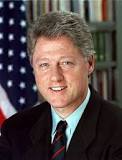
This is his official picture as the 42nd President. I think the Barack Obama would have to be the person that I think is the second best communicator in the modern day and he has some very similar skills to former President Clinton in that he is very articulate and makes personal connections with his audience. I think the second term Barack Obama is much better at the personal connections than was the first term President Obama.
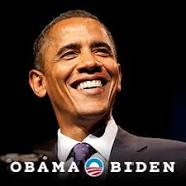
This is his official picture as the 42nd President. I think the Barack Obama would have to be the person that I think is the second best communicator in the modern day and he has some very similar skills to former President Clinton in that he is very articulate and makes personal connections with his audience. I think the second term Barack Obama is much better at the personal connections than was the first term President Obama.
Saturday, April 27, 2013
Professional Hopes and Goals
The one hope that I have for working with children and families of diverse backgrounds is that they feel welcomed and a part of the classroom. My hope is that children would not have to ever feel like they are being discriminated against in any way because of their culture, religious beliefs, gender, or sexual orientation. This is a lofty hope, but it is my hope for children and families.
The goal that I am setting for myself to take the information I have learned in this class and share it with others. I have the opportunity in my work to influence teachers across the state of Oklahoma so I want to be sure to share the importance of social justice. We all have the responsibility of helping educate the teachers of young children through our conversations, working with a co-worker in the break, or by designing trainings that help educate.
I would like to thank my colleagues in this class for helping me and pushing me to learn more. Starting this class I felt like I knew the content and man I was surprised and shocked at the changed that has occurred within myself during this class. I appreciate the great discussion board posts and blogs assignments because they have helped me to grow and learn more about this topic and myself. I look forward to our continued journey.
The goal that I am setting for myself to take the information I have learned in this class and share it with others. I have the opportunity in my work to influence teachers across the state of Oklahoma so I want to be sure to share the importance of social justice. We all have the responsibility of helping educate the teachers of young children through our conversations, working with a co-worker in the break, or by designing trainings that help educate.
I would like to thank my colleagues in this class for helping me and pushing me to learn more. Starting this class I felt like I knew the content and man I was surprised and shocked at the changed that has occurred within myself during this class. I appreciate the great discussion board posts and blogs assignments because they have helped me to grow and learn more about this topic and myself. I look forward to our continued journey.
Saturday, April 20, 2013
Welcoming Families From Around the World (version 2)
For this assignment I will imagine that I am a teacher in a child care center in college town and it is the beginning of the year. I know that I am going to have a child in my classroom from Spain and he only speaks Spanish. The things that I will do in preparation for this new child include adding labels in the classroom in Spanish. This will help the child feel welcome, but will also provide an opportunity for all children to learn. I will work with the parents to find out some children's books that he enjoys from Spain and add those to my library center. This will help him to feel more welcome and something familiar in the classroom and it will expand the diversity in the library for all children. I will learn some key phrases in his home language so that I can provide comfortant and encouragement. Since this is a college town I will work the English as a Second Language institute to get our parent book translated so that they will have access to it in thier home language. This change for our center will help this family, but it increases our overall work with families. Making a change like this will show families that we are committed to meeting their needs. I will invite the family to join us for a storytime that they read the book in thier home language so that thier child will have a sense of pride that they are sharing a piece of thier life with the entire class. This experience will help the child with thier own self-esteem, but it will strenghen the relationship with teachers and the family as well educating all the children in the classroom.
Throughout the Blog I included the five statements of how I would prepare myself and my classroom to be culturally responsive towards this family as well as how I hope these preparations will benefit both myself and the child. Working to meet the needs of all children is critical work for teachers. Positive and accurate learning expereinces about human differences and similiarities help to give children a foundation for resisting incorrect and harmful messages about themselves and others (Derman-Sparks & Edwards, 2010).
Reference
Derman-Sparks, L., & Edwards, J. O. (2010). Anti-bias education for young children and ourselves. Washington, DC: National Association for the Education of Young Children (NAEYC).
Throughout the Blog I included the five statements of how I would prepare myself and my classroom to be culturally responsive towards this family as well as how I hope these preparations will benefit both myself and the child. Working to meet the needs of all children is critical work for teachers. Positive and accurate learning expereinces about human differences and similiarities help to give children a foundation for resisting incorrect and harmful messages about themselves and others (Derman-Sparks & Edwards, 2010).
Reference
Derman-Sparks, L., & Edwards, J. O. (2010). Anti-bias education for young children and ourselves. Washington, DC: National Association for the Education of Young Children (NAEYC).
Welcoming Families From Around the World
For this blog posting I am going to take the position of a teacher in a child care center in a college town. I can relate to this because in the beginning of my career this is exactly the type of classroom that worked in and I had a room full of diversity. The family moving that will be joining my classroom is a four-year-old boy from Spain. He will be coming to the United States with his parents, while his father works on a graduate degree. He speaks only Spanish. As I prepare for his arrival I make some preparations in the classroom so that we are ready for him upon arrival.
The things that I begin to work on prior to his arrival is getting new labels added to all the toy shelves in the classroom so that they are labeled with both English and Spanish. Since my husband's first language is Spanish he is also working with me on learning a few Spanish words so that I can welcome the child and family into the classroom as well as know a few critical words such as bathroom, hungry, and good work. Since we are located in a college town we take our parent handbook to the college to get it translated into Spanish so that the parents will have a version of the handbook in their home language. These are the primary things that I accomplish prior to the child's enrollment, but at enrollment I ask the family what their son's favorite books is so that we can add it to the library prior to his arrival so that we have something familiar in the classroom. Additionally, during the enrollment visit I invite the family to join us on the first day to share a story during group time so that it can also help their son to begin to feel welcome here.
All of the strategies suggested for both prior to arrival and the day of arrival will assist the child in feeling welcomed into this new scary environment. They also show the family our center is dedicated to meeting the needs of all children enrolled not just English speaking children and families. The things that I have learned by doing this preparation is that taking a few extra steps in the beginning to be prepared for the child is worth it when they walk in on day one and connected with different areas of the classroom because they see stuff that is familiar. Once you have established a classroom culture that honors the diversity within your group, then you can begin to add learning opportunities about cultural groups beyond your program (Derman-Sparks & Edwards, 2010).
References
The things that I begin to work on prior to his arrival is getting new labels added to all the toy shelves in the classroom so that they are labeled with both English and Spanish. Since my husband's first language is Spanish he is also working with me on learning a few Spanish words so that I can welcome the child and family into the classroom as well as know a few critical words such as bathroom, hungry, and good work. Since we are located in a college town we take our parent handbook to the college to get it translated into Spanish so that the parents will have a version of the handbook in their home language. These are the primary things that I accomplish prior to the child's enrollment, but at enrollment I ask the family what their son's favorite books is so that we can add it to the library prior to his arrival so that we have something familiar in the classroom. Additionally, during the enrollment visit I invite the family to join us on the first day to share a story during group time so that it can also help their son to begin to feel welcome here.
All of the strategies suggested for both prior to arrival and the day of arrival will assist the child in feeling welcomed into this new scary environment. They also show the family our center is dedicated to meeting the needs of all children enrolled not just English speaking children and families. The things that I have learned by doing this preparation is that taking a few extra steps in the beginning to be prepared for the child is worth it when they walk in on day one and connected with different areas of the classroom because they see stuff that is familiar. Once you have established a classroom culture that honors the diversity within your group, then you can begin to add learning opportunities about cultural groups beyond your program (Derman-Sparks & Edwards, 2010).
References
Derman-Sparks, L., & Edwards, J. O. (2010). Anti-bias
education for young children and ourselves. Washington, DC: National
Association for the Education of Young Children (NAEYC).
Subscribe to:
Posts (Atom)